
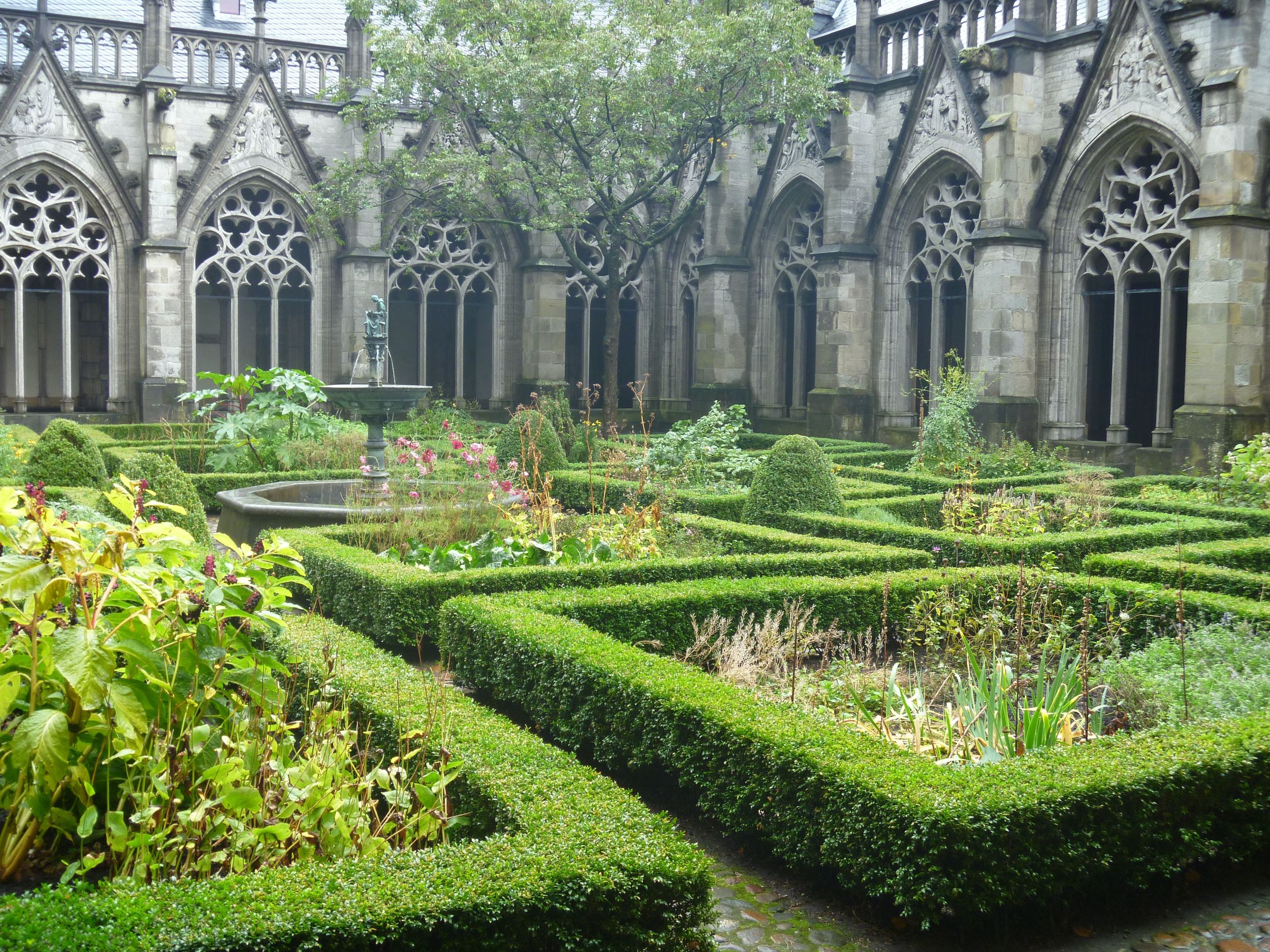
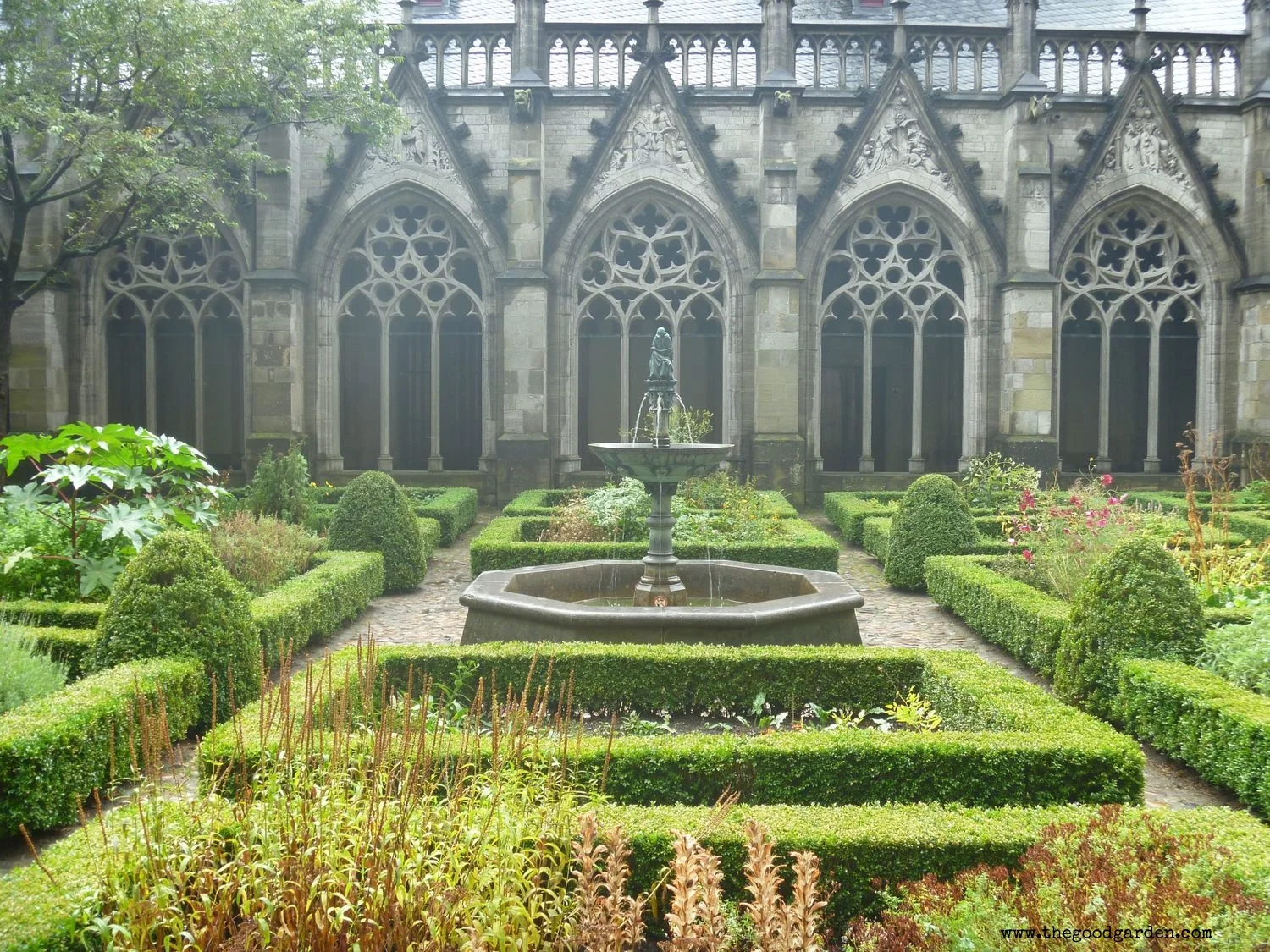
The cloister garden provides shelter from a hostile outside world. Its aim is to offer a space for contemplation and prayer, as well as a productive space for altar flowers, herbs for cooking and healing, and fruit and vegetables for eating.
Look for high walls that isolate the garden and covered walkways around the perimeter. Typically a central water feature provides irrigation and interest; rectangular plant areas make efficient use of the space. Cloister gardens are often not linked to their surrounding building - usually accessed by a side door. This feature adds an element of surprise. Though quite different, another walled garden style is the Islamic garden.
Check out the posts below for other examples of gardens inspired by the Cloister style.

I love the separation that middle age cloister gardens create -- between inside and outside worlds. Prinsenhof in Groningen, the Netherlands, is a wonderful example of this. Its role as a cloister dates back to the 1400’s. Tall brick walls separate it visually from a busy city street. Pleached sycamores peak out above the brick wall – the only sign of something special within. But in the 1500’s Prinsenhof became a residence and the gardens were updated...

Tudor England, a period that spanned 1485 to 1603, gave us William Shakespeare, English conquests in the New World, and the knot garden! This modern knot garden in Wisconsin creates a puzzle that delights even under a blanket of fresh snow...
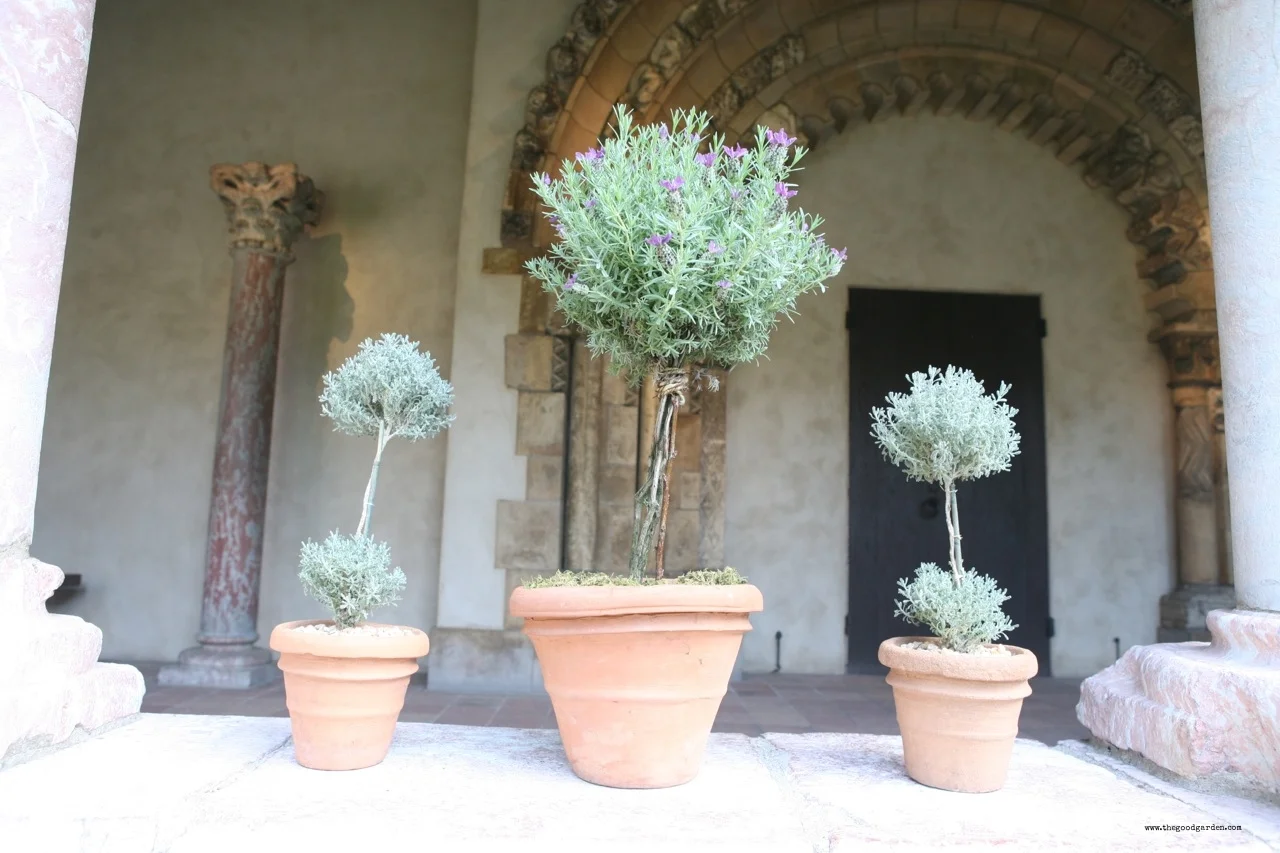
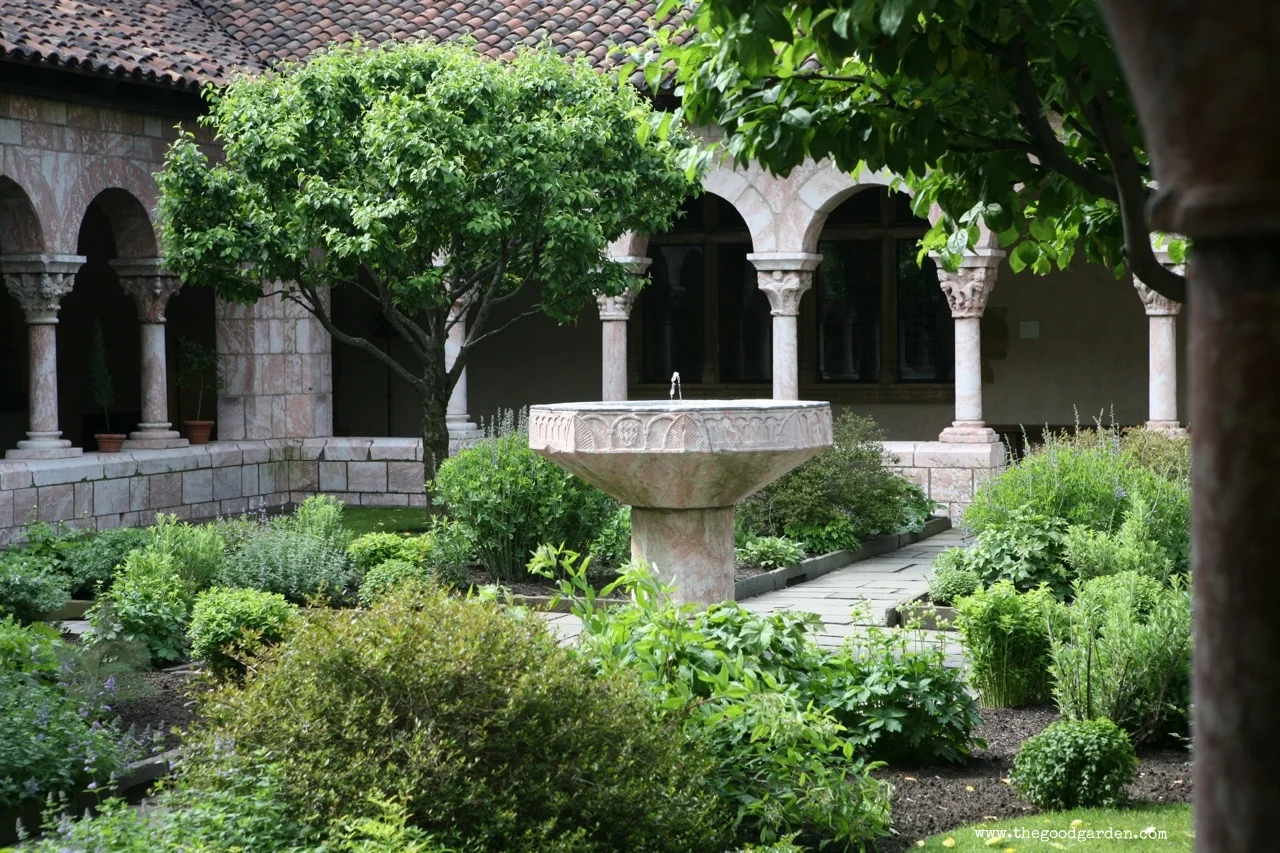
New York City is among the densest places in the world. Amidst all its activity any quiet spot is a source of welcome relief. One my favorite is the Cathedral Church of St. John the Divine. Set on a full block in upper Manhattan. The Cathedral is an inclusive place where all are welcome...