



the good garden

garden history, design inspiration
  • Home
  • My story
  • Talks and Articles
  • Resources
    • Places
    • Styles
    • Books, Video, Websites
  • Home
  • My story
  • Talks and Articles
    • Places
    • Styles
    • Books, Video, Websites

Blog

The good garden blog is about sharing garden inspiration and ideas from historic gardens around the world and some right next door.  Garden stories explore garden history, design, and the garden people behind famous and not-so-famous gardens.  My garden photographs span dozens of places across 5 continents.  Please join me in celebrating good garden design.

  • All
  • Arts and crafts
  • Chinese
  • Cloister
  • French formal
  • Gardenesque
  • Islamic
  • Italian renaissance
  • Japanese
  • Modernist
  • Picturesque
  • Roman
  • Thai
  • Vegetable
  • Wild
thegoodgarden|Beijing|summerpalace|2106.jpg
thegoodgarden|Beijing|summerpalace|2148.jpg
thegoodgarden|Beijing|summerpalace|2209.jpg
thegoodgarden|Beijing|summerpalace|2252.jpg
thegoodgarden|Beijing|summerpalace|445.jpg
thegoodgarden|Beijing|summerpalace|2241.jpg
thegoodgarden|Beijing|summerpalace|2283.jpg
thegoodgarden|Beijing|summerpalace|2115.jpg
thegoodgarden|Beijing|summerpalace|2106.jpg thegoodgarden|Beijing|summerpalace|2148.jpg thegoodgarden|Beijing|summerpalace|2209.jpg thegoodgarden|Beijing|summerpalace|2252.jpg thegoodgarden|Beijing|summerpalace|445.jpg thegoodgarden|Beijing|summerpalace|2241.jpg thegoodgarden|Beijing|summerpalace|2283.jpg thegoodgarden|Beijing|summerpalace|2115.jpg

Summer palace in Winter

David January 17, 2015

Some believe that the development of the picturesque style in Europe was directly inspired by tales from travelers returning from China.

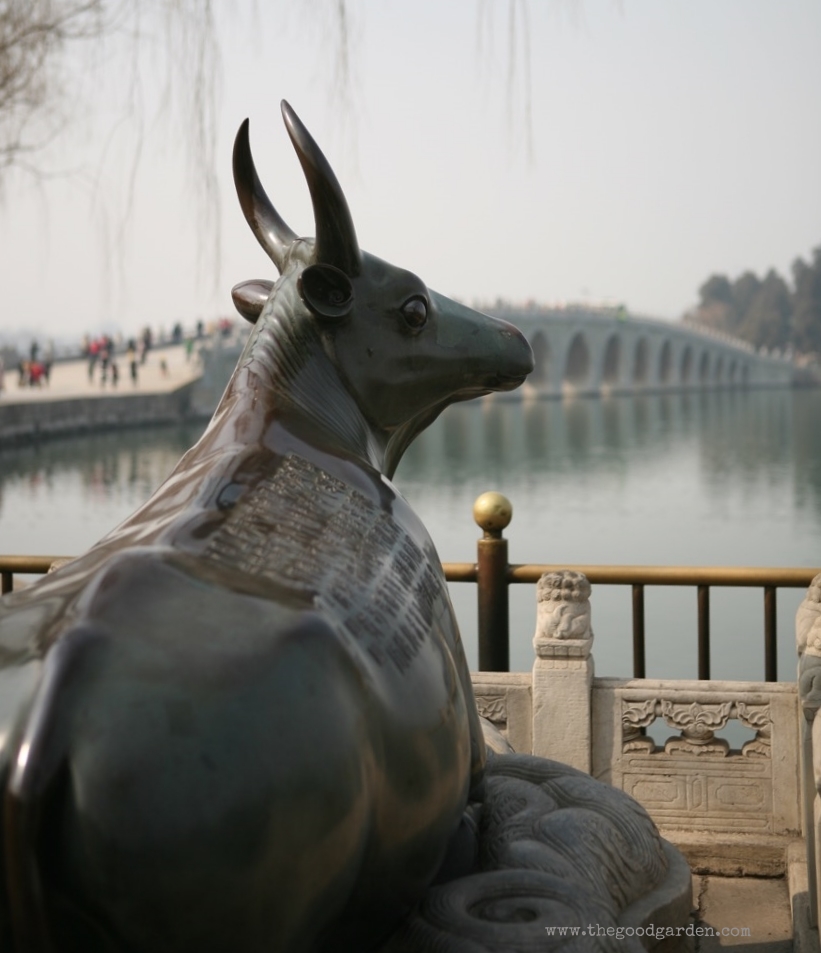
One example of a garden that may have inspired Europeans in this way is the Garden of Clear Ripples created in 1750 by Emperor Qianlong.

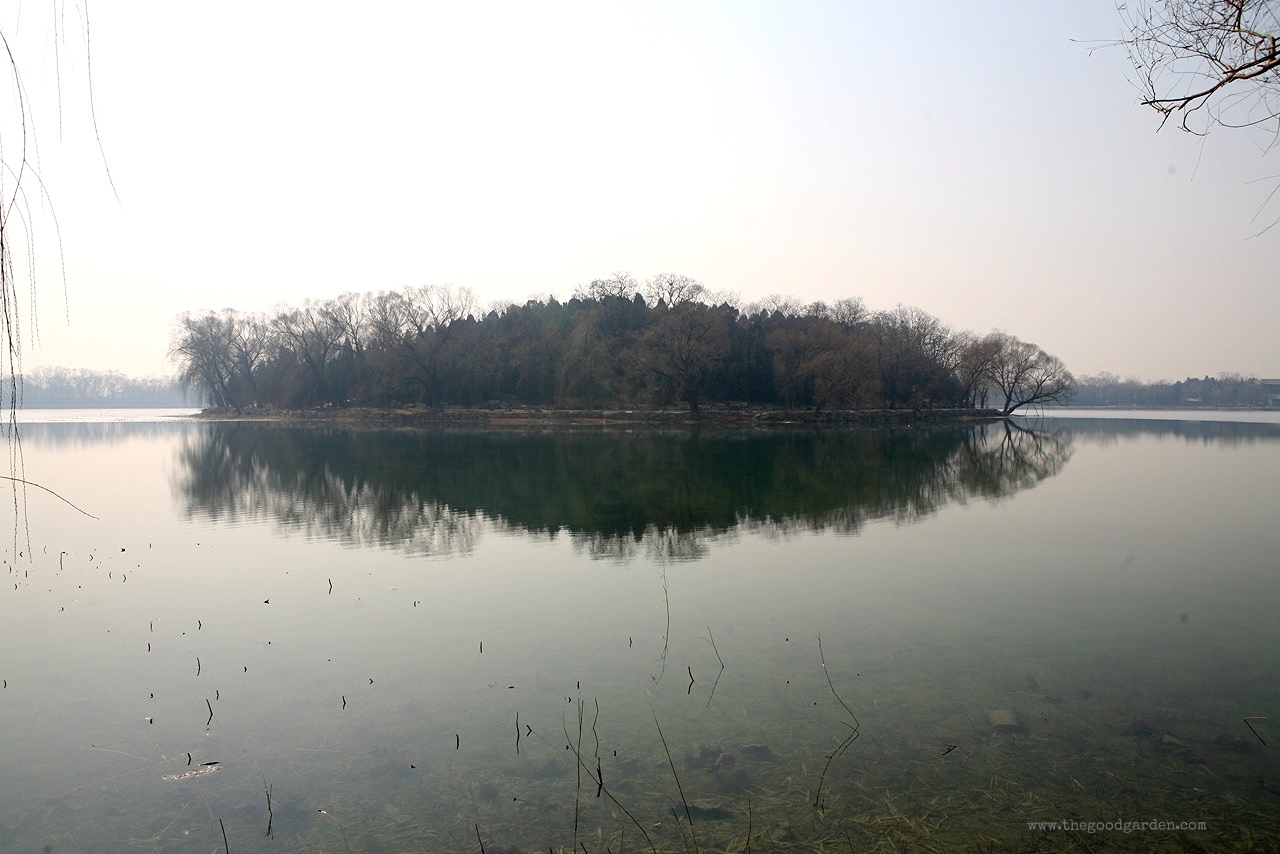
The hill and pond structure that we see in this garden, we also see in the scholar gardens of Suzhou and in Japanese gardens.  Dominant features in the Garden of Clear Ripples include Kunming Lake, which makes up 75% of the garden, Longevity Hill, and three islands connected by bridges. 

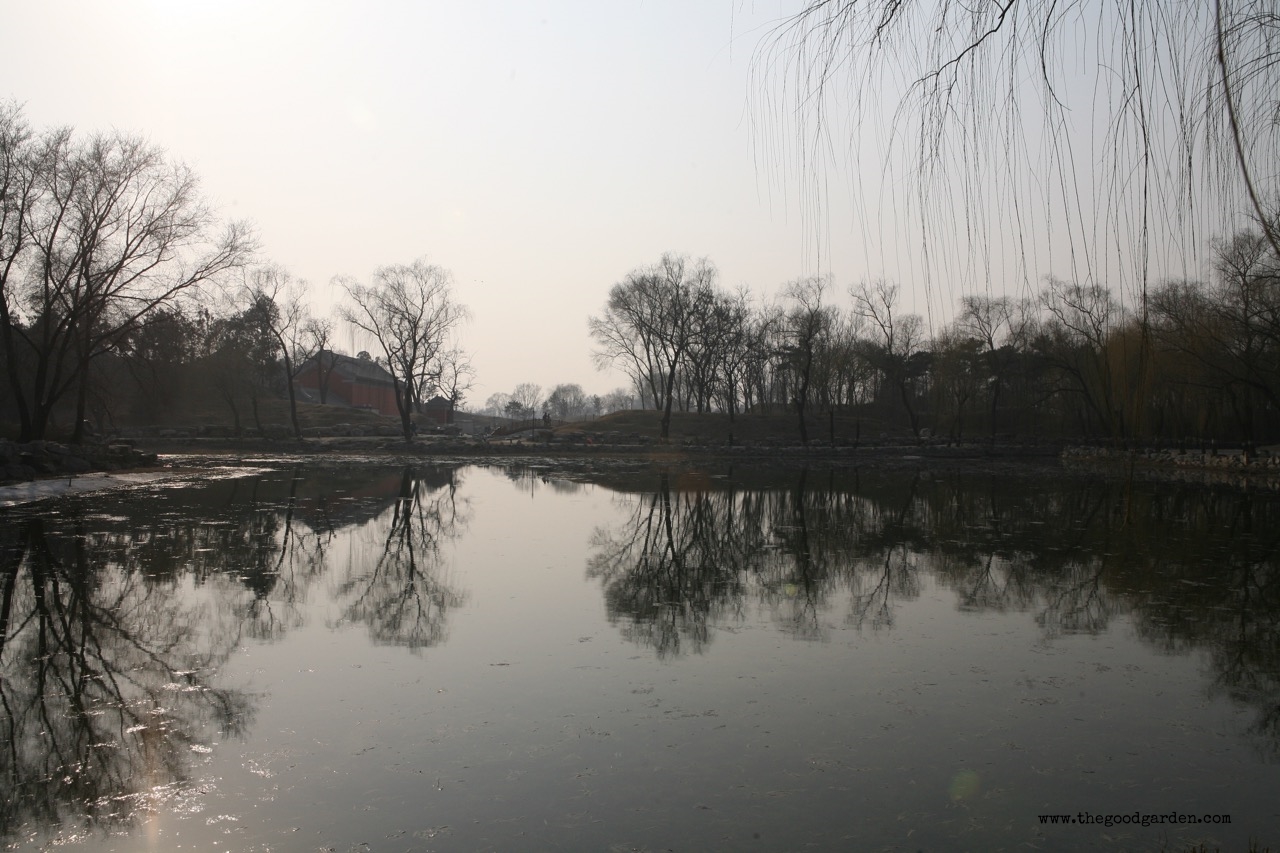
Traditional buildings enhance the garden and provide places to pause, relax. The garden is laid out to provide views and vignettes from key vantage points along the path.  The overriding theme is harmony with nature; some elements mirror features of the natural scenery found beside the Yangtze River.

A sign along the main garden path explains that this section was inspired by a painting from around 1300 and reminds us that this garden was destroyed in 1860 and rebuilt in 1992. (click on image to read the text)

On the winter day of my visit, the garden was quite busy.  I was told by my guide that during the spring and summer this garden is packed.  A pile of dragon boats stored in a cove wait for warmer weather to carry passengers into the lake.

The story of this garden follows the modern history of China’s relations with the West which resulted in its destruction, and re-creation several times. 

In the 1840’s, silk, porcelain, and tea exports from China flooded into Europe, but few Western goods made it into China.  In an attempt to offset the trade imbalance, the British East India Company began importing opium from India into China via middlemen.  Chinese efforts to stop this led to the Opium Wars.  During the 2nd Opium War in the 1850’s, Anglo-French forces destroyed the garden.

Abandoned for a generation, the garden was rebuilt in the 1890’s and renamed the Summer Palace for the Empress Dowager Cixi. When the Empress allied herself with the Boxers, an anti-foreign and anti-Christian group, attacks on missionaries and diplomats resulted in another Western military mission in China. During the invasion in 1900, the garden was destroyed once again.  Today the garden holds pride of place for the Chinese and is protected as a Cultural Relic. 

Learn more about visiting this garden here.

 
 
Freer Gallery of Art and Arthur M. Sackler Gallery.  NY Times. October 27, 2013.  Empress Dowager Cixi in the gardens of the Summer Palace. Click on photo to check out June Chang's new biography about Empress Cixi.

Freer Gallery of Art and Arthur M. Sackler Gallery.  NY Times. October 27, 2013.  Empress Dowager Cixi in the gardens of the Summer Palace. Click on photo to check out June Chang's new biography about Empress Cixi.

In Chinese Tags garden history, historic gardens, Summer Palace, Beijing, Empress Cixi, garden stories
2 Comments
 The forsythia dell at Dumbarton Oaks, Washington, DC.

The forsythia dell at Dumbarton Oaks, Washington, DC.

 The Rose Garden at Cliveden, Buckinghamshire, UK.

The Rose Garden at Cliveden, Buckinghamshire, UK.

 Turf seat at Sissinghurst Castle, Kent, UK.

Turf seat at Sissinghurst Castle, Kent, UK.

 Log seats facing the lake at Landriana, Lazio, Italy.

Log seats facing the lake at Landriana, Lazio, Italy.

 Teak bench at Princeton University's Maclean House garden, Princeton, NJ.

Teak bench at Princeton University's Maclean House garden, Princeton, NJ.

 Stone bench detail from Villa Bardini, Florence, Italy.

Stone bench detail from Villa Bardini, Florence, Italy.

 Neighborhood conversation bench, secret garden, London, UK.

Neighborhood conversation bench, secret garden, London, UK.

 The forsythia dell at Dumbarton Oaks, Washington, DC.  The Rose Garden at Cliveden, Buckinghamshire, UK.  Turf seat at Sissinghurst Castle, Kent, UK.  Log seats facing the lake at Landriana, Lazio, Italy.  Teak bench at Princeton University's Maclean House garden, Princeton, NJ.  Stone bench detail from Villa Bardini, Florence, Italy.  Neighborhood conversation bench, secret garden, London, UK.

Favorite garden benches

David January 13, 2015

One of my favorite features in a garden is the garden bench. 

A bench in a garden is an invitation to sit down, relax, take in a view.  At the end of a path, a bench provides a focal point.  A bench furnishes a place to go to, a destination, and a sense of shelter.

A good bench reinforces the overall feel and design of the garden.  Rough-hewn wood benches work well in picturesque gardens; fine teak benches lend a more formal style; a simple log bench emphasizes the rustic ambiance of a garden, and benches with grass seats were popular in the medieval garden.

Scroll over each of the photos above to learn more about these gardens.

Tags garden benches, historic gardens, garden history, Garden inspiration, garden ideas, Cliveden, Sissinghurst, Landriana, Princeton, Dumbarton Oaks, garden design, Giardino Bardini
1 Comment
thegoodgarden|Versailles|formal|8752.jpg
thegoodgarden|Versailles|formal|8772.jpg
thegoodgarden|Versailles|formal|8789.jpg
thegoodgarden|Versailles|formal|9128.jpg
thegoodgarden|Versailles|formal|8760.jpg
thegoodgarden|Versailles|formal|8763.jpg
thegoodgarden|Versailles|formal|9131.jpg
thegoodgarden|Versailles|formal|8752.jpg thegoodgarden|Versailles|formal|8772.jpg thegoodgarden|Versailles|formal|8789.jpg thegoodgarden|Versailles|formal|9128.jpg thegoodgarden|Versailles|formal|8760.jpg thegoodgarden|Versailles|formal|8763.jpg thegoodgarden|Versailles|formal|9131.jpg

The orangerie @ Versailles

David January 10, 2015

Versailles, the famous palace and town west of Paris, became the seat of the French government in 1682 and remained so for over 100 years.  The name conjures images of luxury, magnificence, and excess.  In the 1970’s, it was even used to name the Lincoln Versailles, a re-badged Ford Granada.  (Granada also the name of a town with a famous garden.)  But I digress…

In the garden at the Palace of Versailles, one of the iconic sections is the Orangerie.  Built by architect Jules Hardouin-Mansart in the 1680’s, it epitomizes the French formal style with geometry, symmetry, control, and perspective. This garden includes six sections of grass arranged around an oval pool, and a crushed stone walk that lines up with the formal Swiss Lake, all conveniently meant to be taken in from the roof terrace of the Orangerie.

Over 1,000 orange, lemon, and pomegranate trees, many reported to be over 200 years old, flourish in quintessential painted wood and metal boxes called Versailles planters.  Still made by hand in France using traditional techniques, a mid-sized planter weighs 400 pounds and will set you back thousands of dollars.  It’s like an Hermes bag for your plant!  Said to last 150 years, the craftsmanship visible in these planters make them worth it.  Nonetheless, with 1,000 planters, this garden has millions tied up in garden pots. 

The potted trees spend their summers outside, and their winters tucked safely inside the Orangerie where they are protected by tall windows.  I reached this garden from the Queen’s Grove by climbing up through the Hundred Steps Gate.  Though the garden did not pull me in the way more intimate gardens do, I found myself observing this structured garden for some time.  Meant to be viewed from above, the central walk lines up perfectly with the Swan Lake which visually points to the horizon where the landscape becomes more natural.  The perfect spiraling designs in the lawn beg to traced.  The symmetry and repetition give it a special rhythm. And the trees, each unique yet also similar in their identical blue-green boxes, are arranged as if they were soldiers in uniform, all standing an arms-length apart.

Click here for more posts about the Versailles and the French formal garden style.


In French formal Tags Jules Hardouin-Mansart, Versailles, Orangerie, Famous garden, garden ornament, garden history, historic gardens, history of gardens, garden stories, garden design
Comment
  • Blog
  • Older
  • Newer
Subscribe
No results found
Garden stories
 
facebook email
  • Policies
  • Contact
  • Subscribe
Garden stories

©2025 David Calle. The Good Garden.

the good garden

garden history, design inspiration

facebook email