the good garden

garden history, design inspiration
  • Home
  • My story
  • Talks and Articles
  • Resources
    • Places
    • Styles
    • Books, Video, Websites
  • Home
  • My story
  • Talks and Articles
    • Places
    • Styles
    • Books, Video, Websites

Blog

The good garden blog is about sharing garden inspiration and ideas from historic gardens around the world and some right next door.  Garden stories explore garden history, design, and the garden people behind famous and not-so-famous gardens.  My garden photographs span dozens of places across 5 continents.  Please join me in celebrating good garden design.

  • All
  • Arts and crafts
  • Chinese
  • Cloister
  • French formal
  • Gardenesque
  • Islamic
  • Italian renaissance
  • Japanese
  • Modernist
  • Picturesque
  • Roman
  • Thai
  • Vegetable
  • Wild
thegoodgarden|granada|generalife|9625.jpg
thegoodgarden|granada|generalife|9574.jpg
thegoodgarden|granada|generalife|8940.jpg
thegoodgarden|granada|generalife|9568.jpg
thegoodgarden|granada|generalife|8011.jpg
thegoodgarden|granada|generalife|7953.jpg
thegoodgarden|granada|generalife|7951.jpg
thegoodgarden|granada|generalife|9625.jpg thegoodgarden|granada|generalife|9574.jpg thegoodgarden|granada|generalife|8940.jpg thegoodgarden|granada|generalife|9568.jpg thegoodgarden|granada|generalife|8011.jpg thegoodgarden|granada|generalife|7953.jpg thegoodgarden|granada|generalife|7951.jpg

In search of paradise

David December 6, 2014

The Christian cloister garden and the Islamic garden flourished during the middle ages.  They share a number of design features including enclosure, geometry, and explicit references to reflection and spirituality.     

Differences in religious emphasis, however, resulted in quite different garden styles.  The Christian cloister, set up for contemplation and prayer, is packed with literal depictions of saints and Christ.  Plant material, while beautiful, clearly served as food, as medicine or as decoration for the altar. 

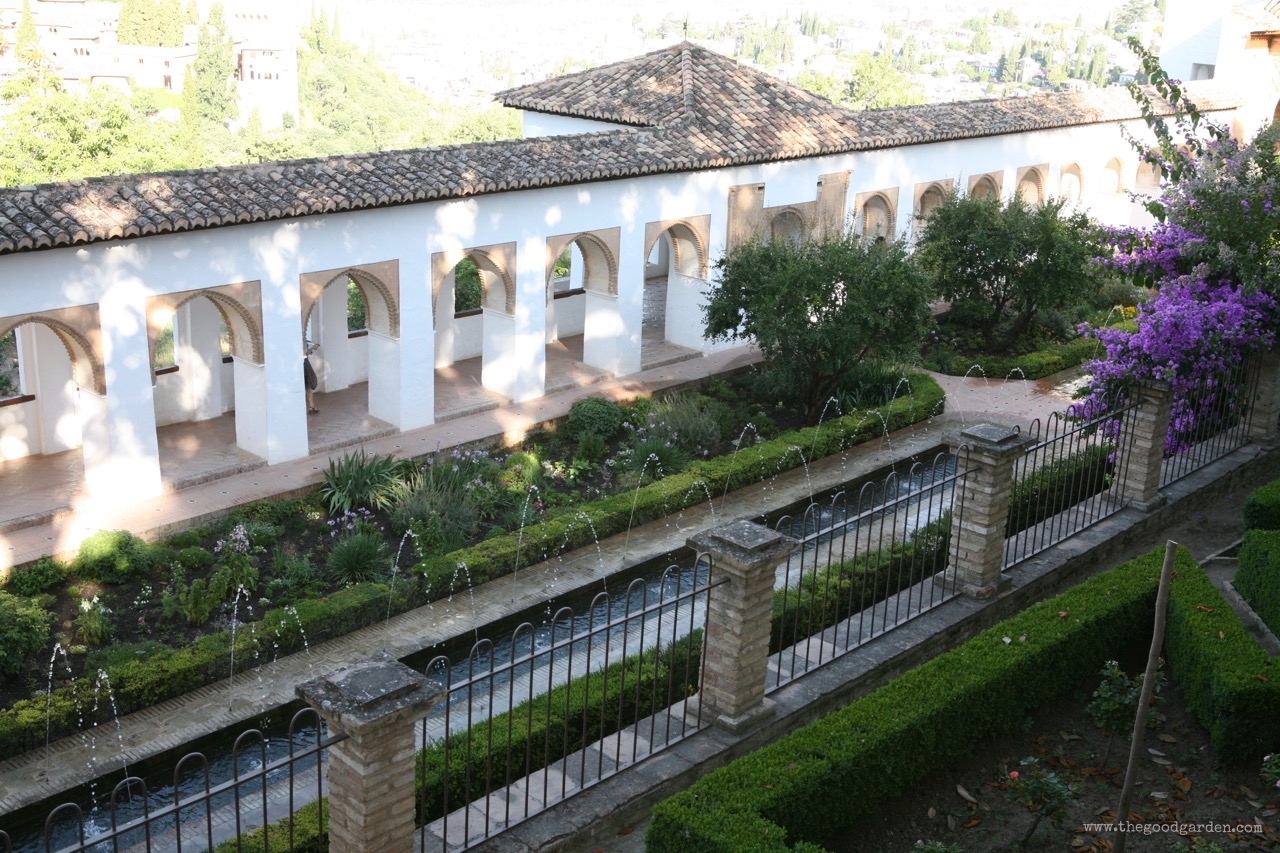
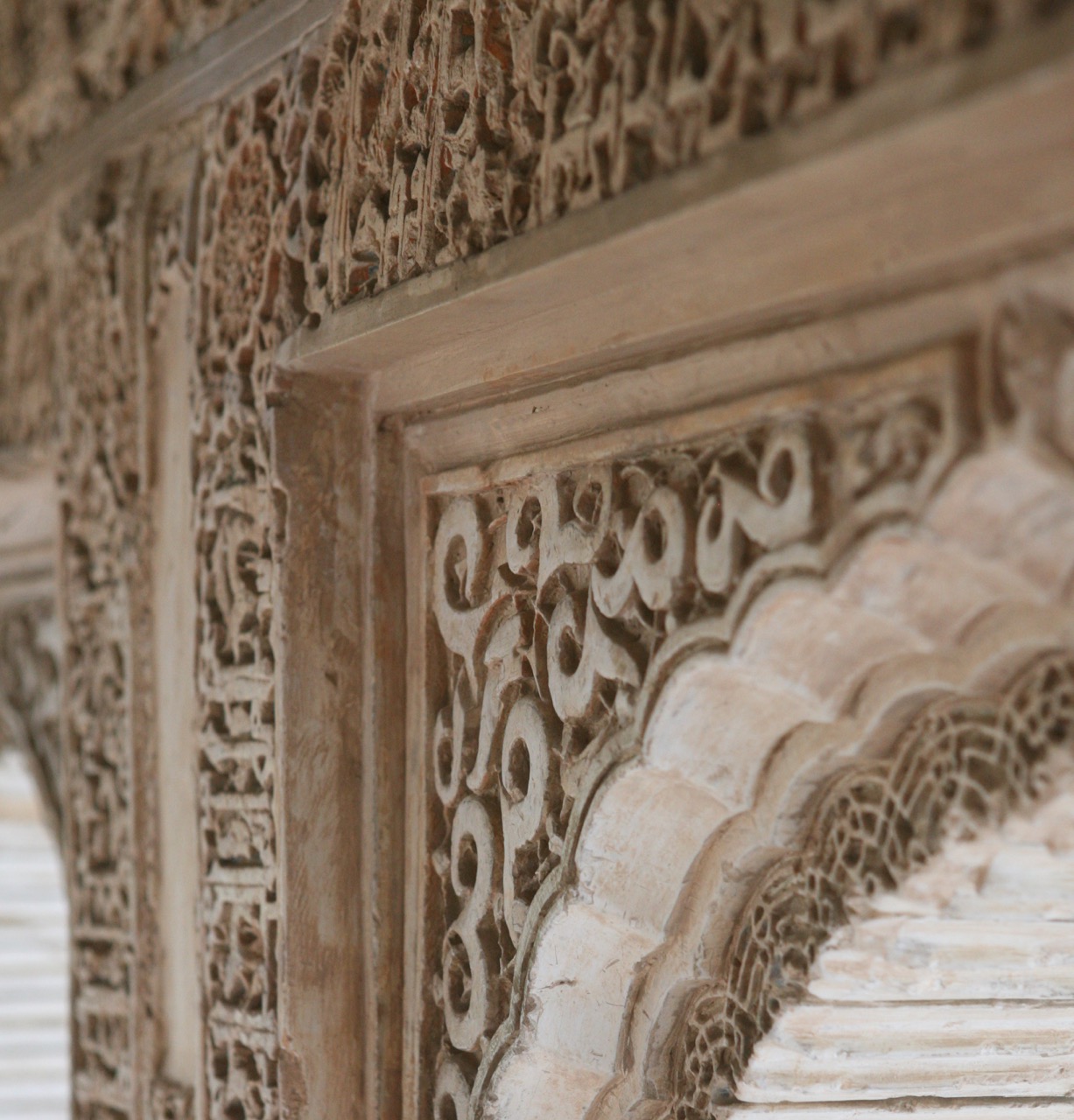
In contrast, the Islamic garden is a representation of the paradise described in religious texts.  Crisscrossing streams of water and pathways reference the four rivers leading to Eden.  Plant material is luxurious and colorful.  Ornamentation is figurative; it celebrates nature without literally representing living beings, a nod to the teaching that only God can make living things. Bountiful water inside the garden is a powerful contrast when the garden sits in a climate as arid as the one pictured above in Granada’s Generalife garden.

My favorite element of the Islamic garden is the seamless interweaving of indoor and outdoor space.  Interior living space opens up to the garden; the garden then connects to and flows into another indoor space. 

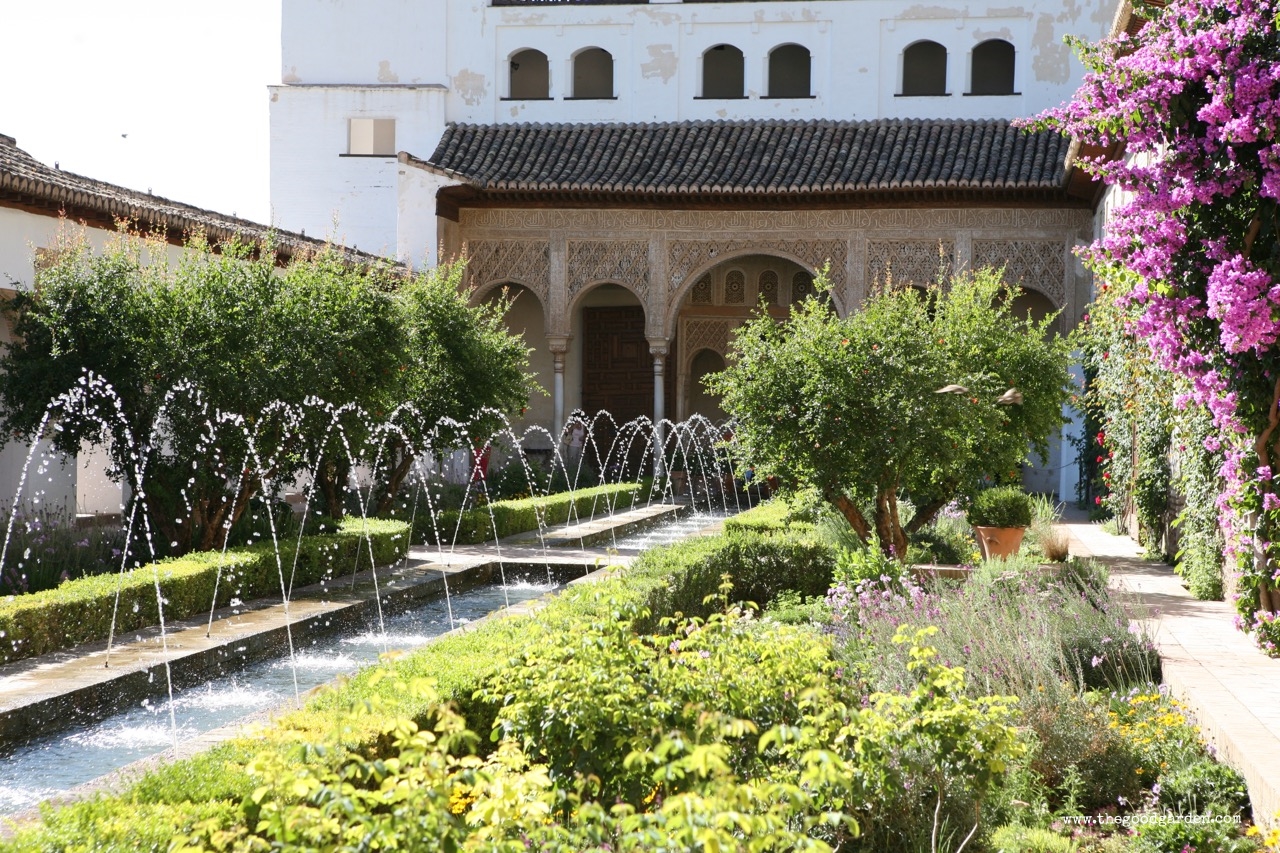
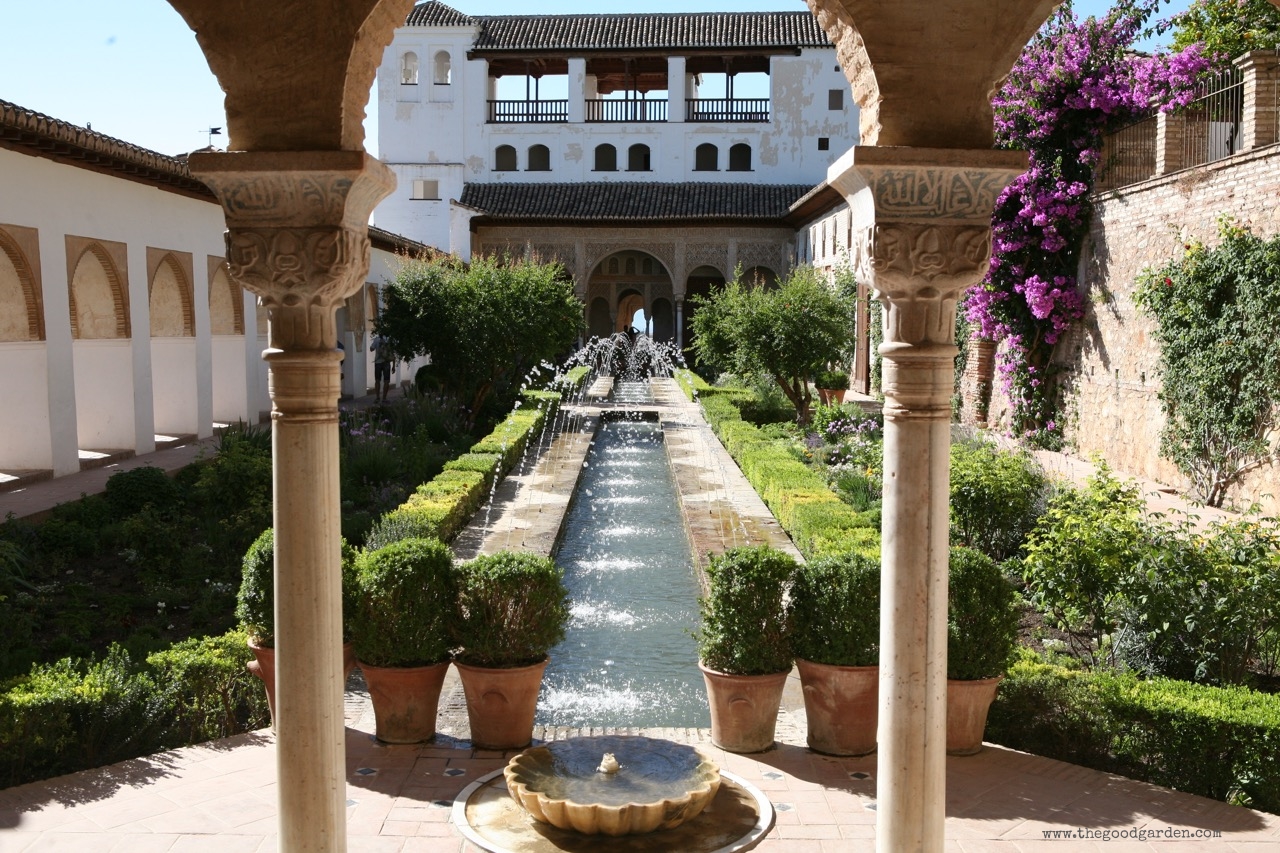
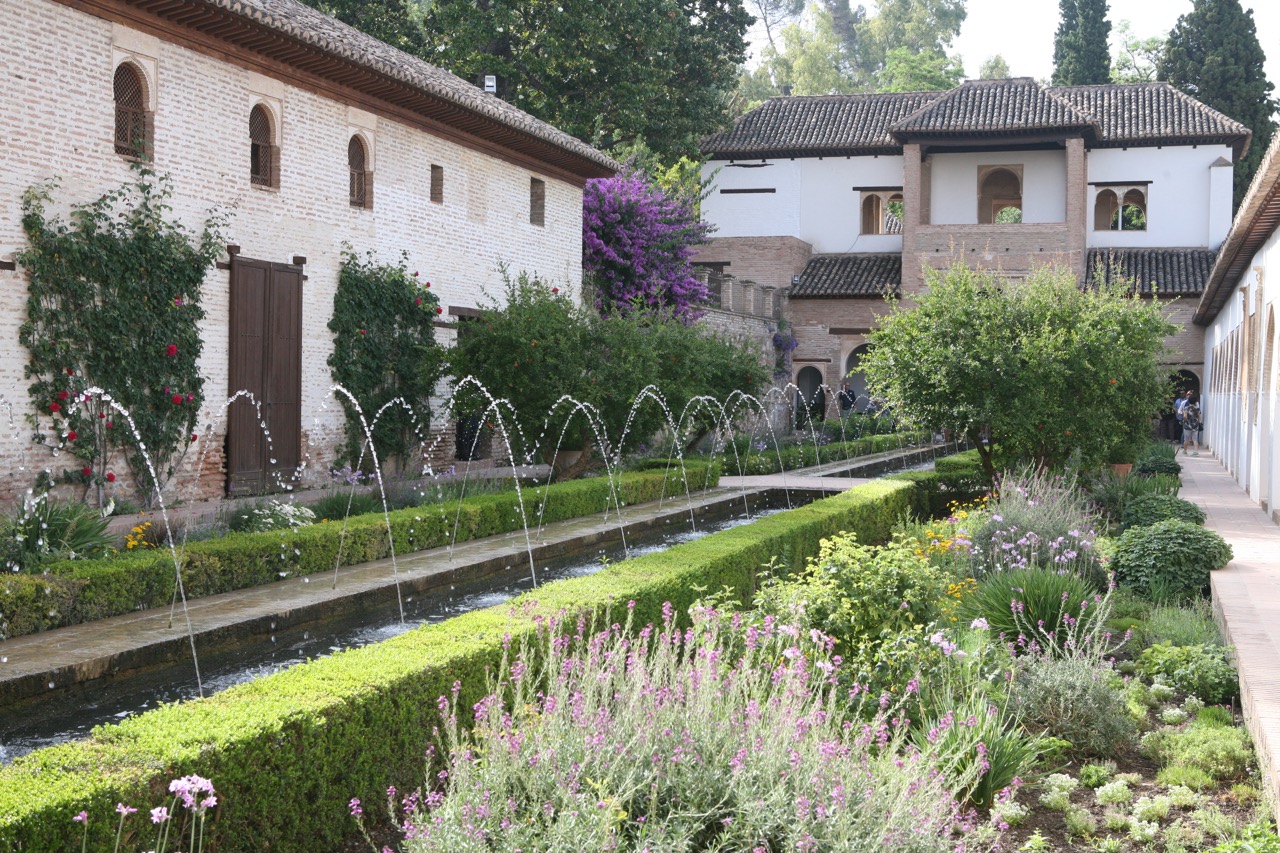
The garden I’ve photographed here is one of the most famous examples of an Islamic garden.  It’s the Patio de Acequia in Granada’s Generalife.  The name Generalife is derived from the Arab word Jianan al-Arif, which translates literally as “The Paradise Garden of the Overseer.” 

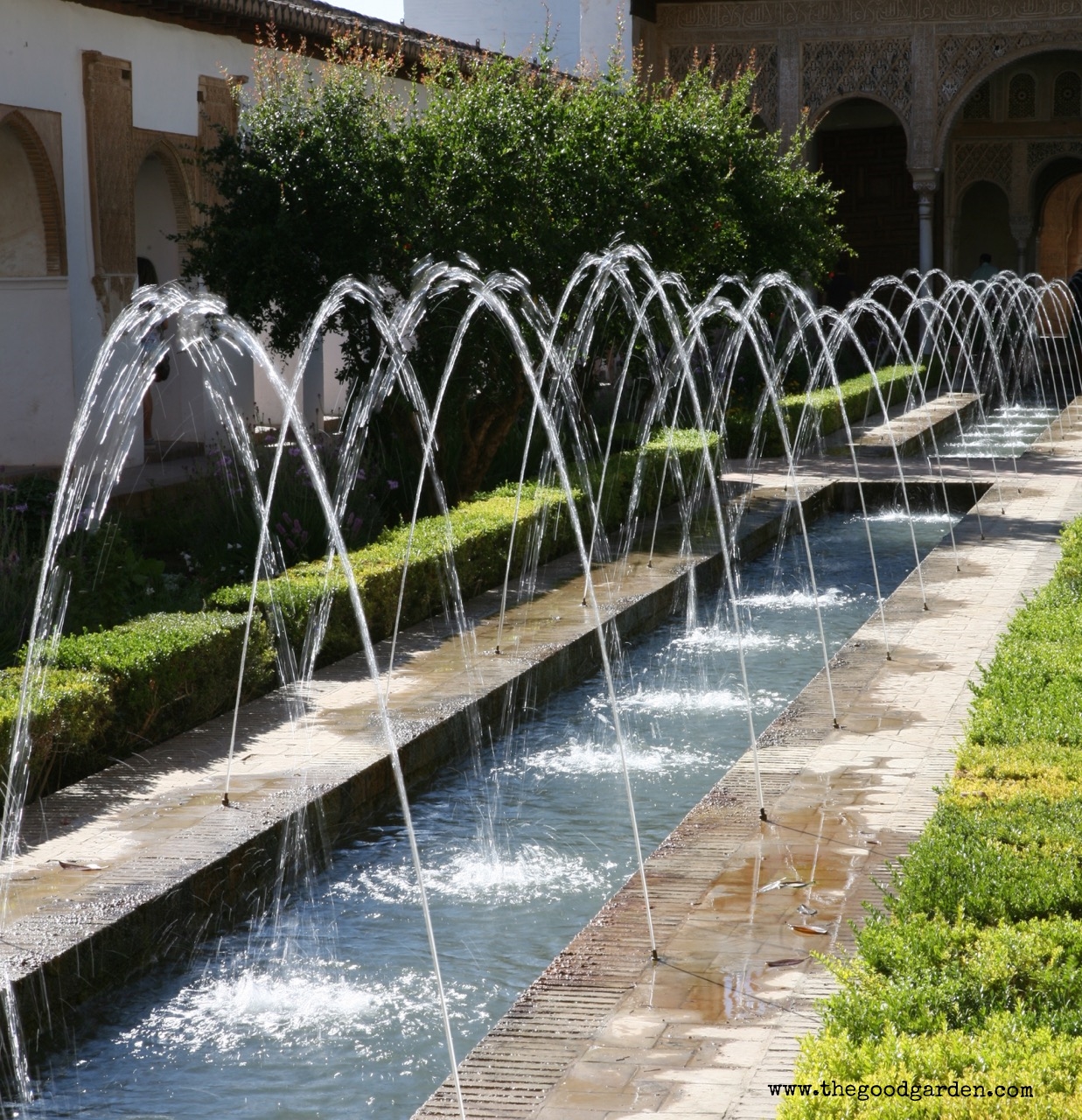
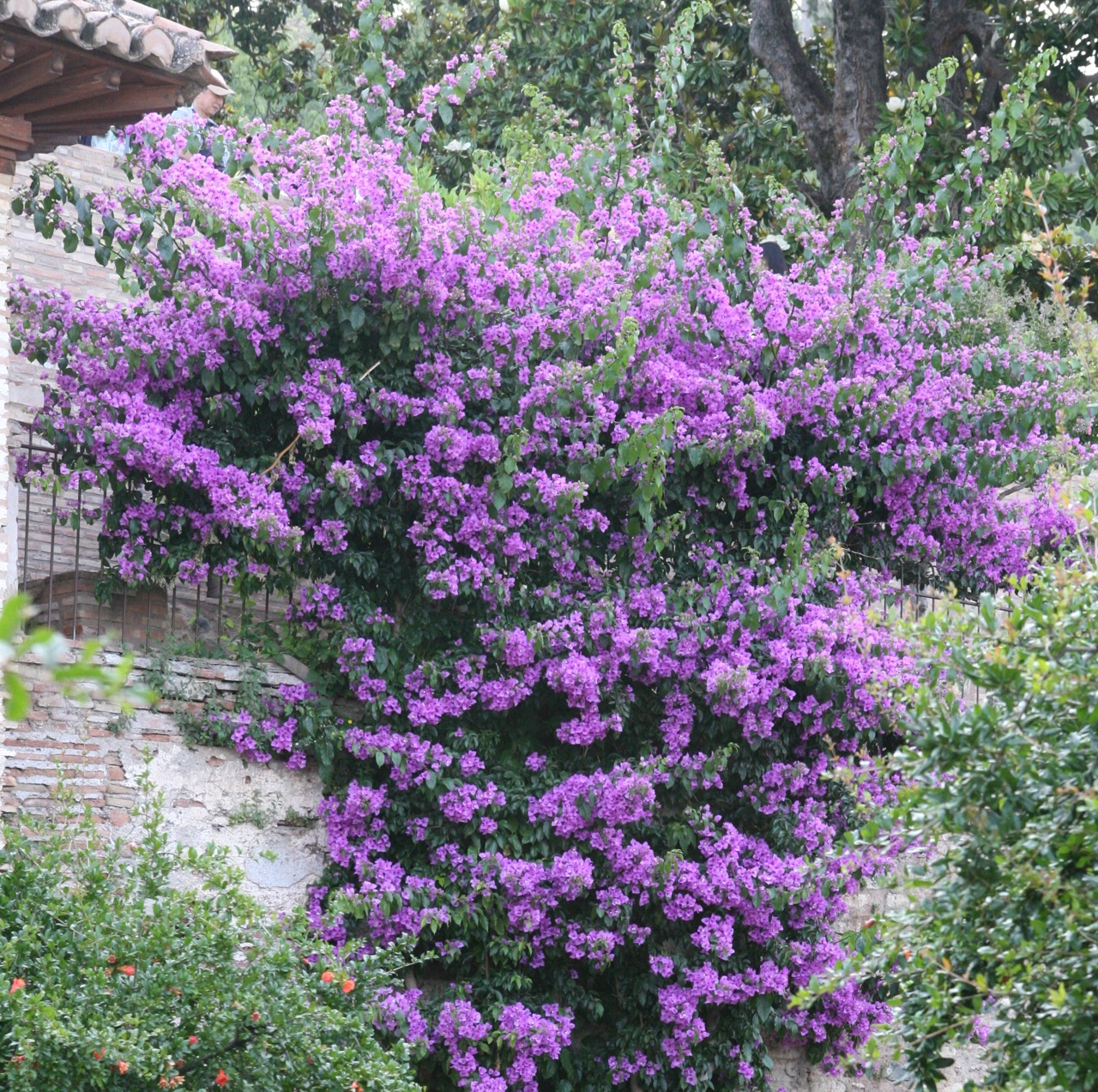
Built in the 1300’s as part of the Sultan’s summer palace, the garden is bisected by a water canal and a stone walkway.  Plant material is lush and colorful, selected for its beauty.  It delights the senses on many levels:  simple water jets sprinkle and provide rhythm; box hedges provide order; climbing roses and bougainvillea lift the eyes; a pool of water reflects the sky, and the fragrance of thousands of flowers permeates the air.

As with many historic gardens, this one has evolved over time.  The water jets are ‘new’ - as of the 1500’s - and the planting beds have been raised.  Originally the tops of the plants were meant to reach the same level as the walkway: to simulate a living Persian carpet.  A covered pavilion once marked the central point where the metaphorical four rivers of Eden met.  Even with these changes, this garden remains an icon.

When visiting the Generalife be sure to order tickets on-line well in advance; the number of tickets each day is limited and they do sell out. 


In Islamic Tags Generalife, Patio de Acequia, Granada, Spain, water feature, garden history, garden ornament, Garden inspiration, plant ideas, historic gardens, famous gardens, famous gardens of the world, garden stories, garden design
Comment
thegoodgarden|luriegarden|chicago|1491.jpg
thegoodgarden|luriegarden|chicago|1508.jpg
thegoodgarden|luriegarden|chicago|1512.jpg
thegoodgarden|luriegarden|chicago|1515.jpg
thegoodgarden|luriegarden|chicago|1523.jpg
thegoodgarden|luriegarden|chicago|1524.jpg

Garden puzzle

David December 2, 2014

Thanks for your emails and comments on the Lurie Garden post last week.  Many of you asked for the names of the plants in the photos.  After several failed attempts to do so myself, I realize that I could use your help in identifying these winter beauties.  Please send me any plant names you recognize so that together we can solve this puzzle. 

Either comment below or send me your thoughts at:   david@thegoodgarden.com

For clues (or if you want to recreate a garden like this), the full planting plan for this garden is available here.

In Wild Tags Chicago, plant ideas, garden design, Lurie Garden
Comment
thegoodgarden|thecloistersmuseum|nyc|3032.jpg
thegoodgarden|thecloistersmuseum|nyc|2870.jpg
thegoodgarden|thecloistersmuseum|nyc|2898.jpg
thegoodgarden|thecloistersmuseum|nyc|2877.jpg
thegoodgarden|thecloistersmuseum|nyc|2883.jpg
thegoodgarden|thecloistersmuseum|nyc|2917.jpg
thegoodgarden|thecloistersmuseum|nyc|3032.jpg thegoodgarden|thecloistersmuseum|nyc|2870.jpg thegoodgarden|thecloistersmuseum|nyc|2898.jpg thegoodgarden|thecloistersmuseum|nyc|2877.jpg thegoodgarden|thecloistersmuseum|nyc|2883.jpg thegoodgarden|thecloistersmuseum|nyc|2917.jpg

Rare relics kept from America

David November 29, 2014

The New York Times headline in 1913 read “Rare relics kept from America by French protest.”

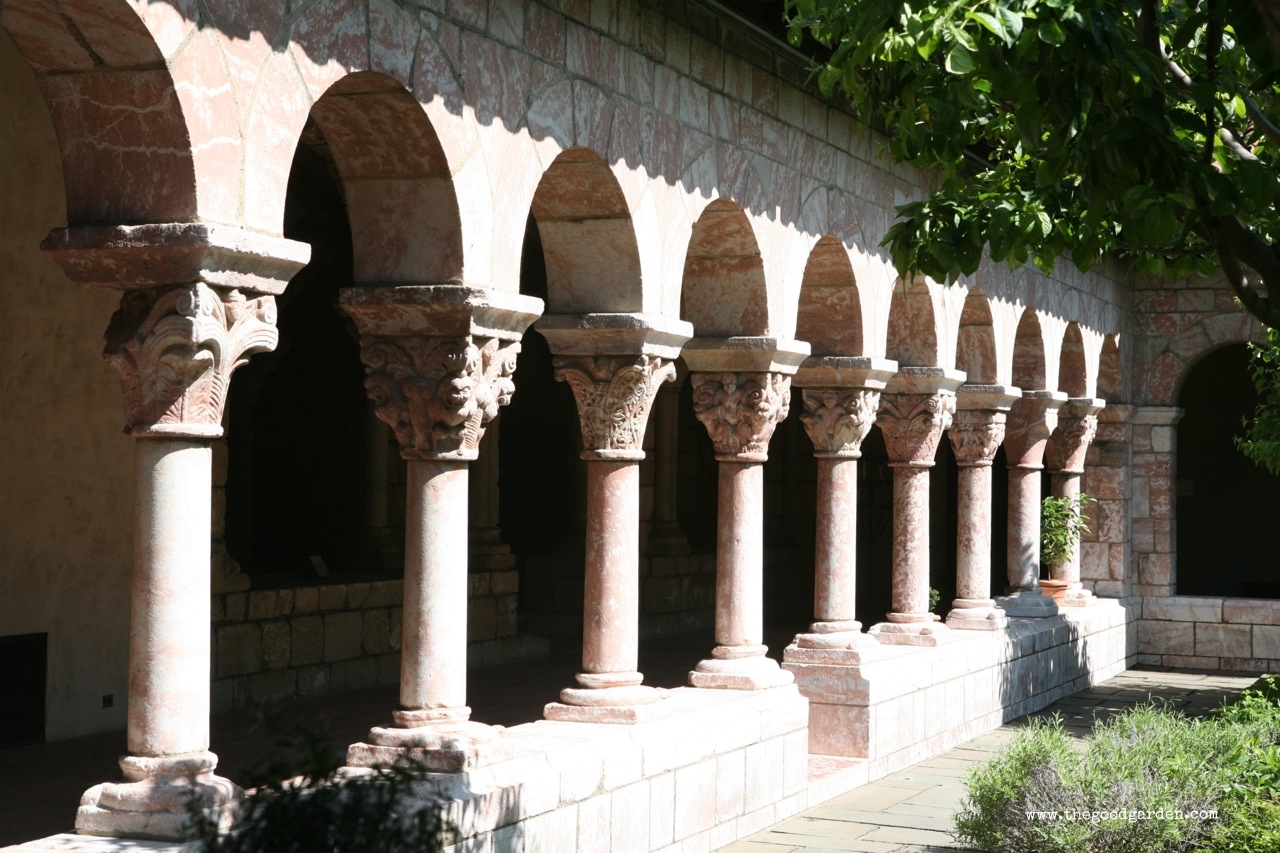
The relics in question were twelve marble pillars from the Abbey of St. Michel de Cuxa in France. American sculptor George Grey Bernard, known for his monumental public sculptures, had purchased the pillars and was trying to export them to the US.   “So emphatic was the protest aroused in France when his plan became known that the French government intervened and caused him to give up his project.” 

This Abbey had a storied past. It was built around 950 with support from Queen Girberge, mother of Charlemagne’s oldest son.  A few years later, in 978, the Abbey became the home of the Doge of Venice, Pietro Orseolo, who scandalously renounced his power and possessions to seek a monastic spiritual life.  For years the Abbey prospered.  Its treasures were said to include the head of St. Valentine! and a wooden piece of original manger from Bethlehem. 

Long after his death – in the early 1700’s, Orseolo became a saint, and the Abbey became a place of pilgrimage for those seeking its supposed healing powers. By 1793, when France was in the midst of its famous Revolution, the community of St. Michel de Cuxa had withered to a single monk.  That same year, villagers looted the Abbey and began to demolish it.  This all happened one week after Louis XVI was beheaded, and was consistent with the revolution’s path of dismantling centuries-old institutions.  The revolutionary government finally sold the property for the equivalent of $100,000 in today’s money. 

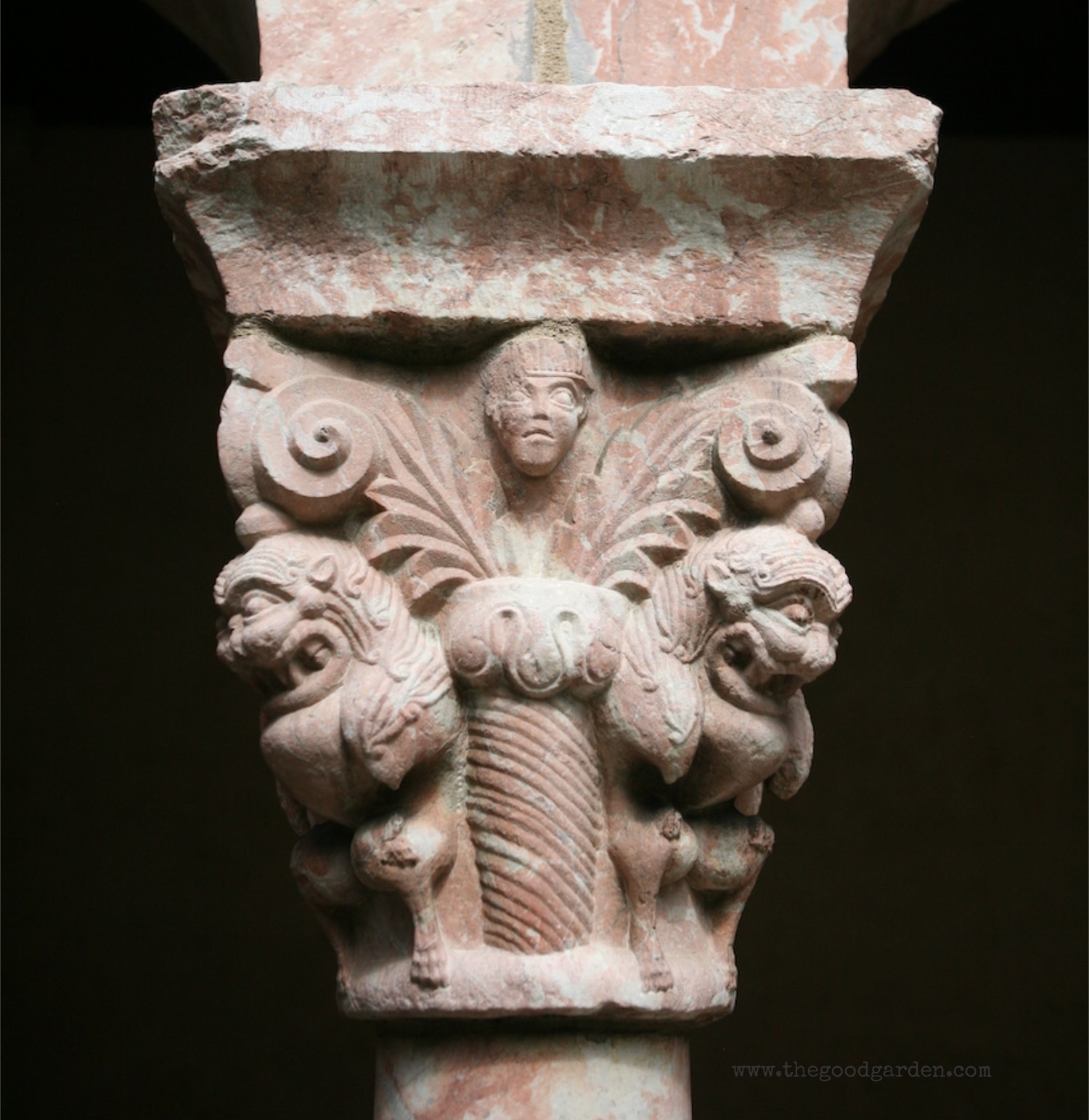
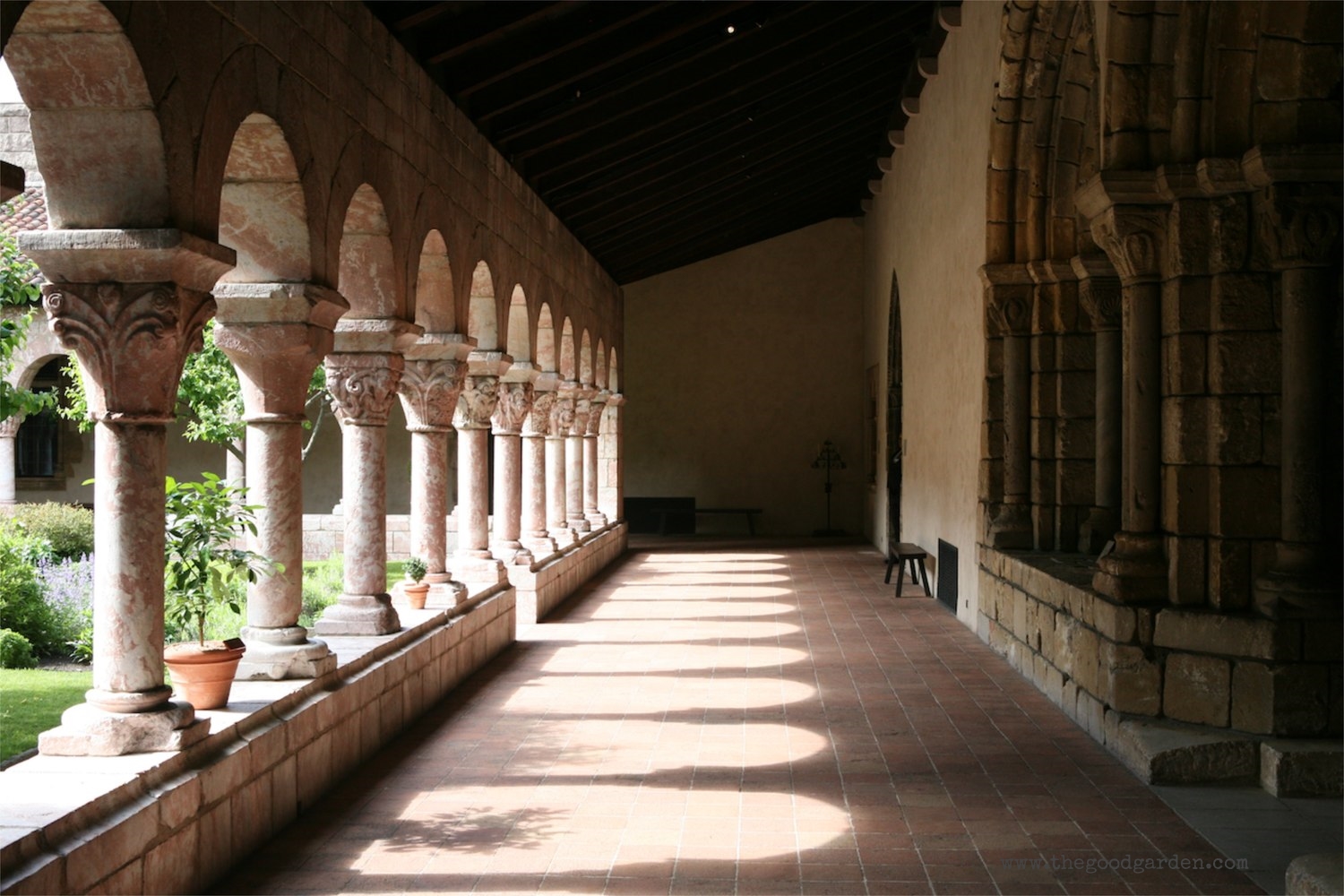
In 1913, The New York Times described the cloister’s marble pillars: ”There probably do not exist in France any more characteristic mediaeval sculptures than those of St. Michel de Cuxa….  The capitals … are modeled with great simplicity and executed with rare energy.  The sculptor (probably a monk) was endowed with a singular imagination.”

The pillars were removed in 1840, and used for the entrance to a “bathing establishment” in a nearby town.  They were sold to Bernard in 1907.  The French protest was surprising given that he had already shipped 30 similar columns and capitals to America. 

Somehow, even with all the uproar, Bernard managed to transport the columns to New York City for a museum he built in 1914 on the northern tip of Manhattan.

In 1925, John D. Rockefeller helped the Metropolitan Museum purchase Bernard’s collection of medieval art and artifacts and provided land and support to move Bernard’s collection from his original museum.  The new location would become the Cloisters museum, part of The Metropolitan Museum of Art.

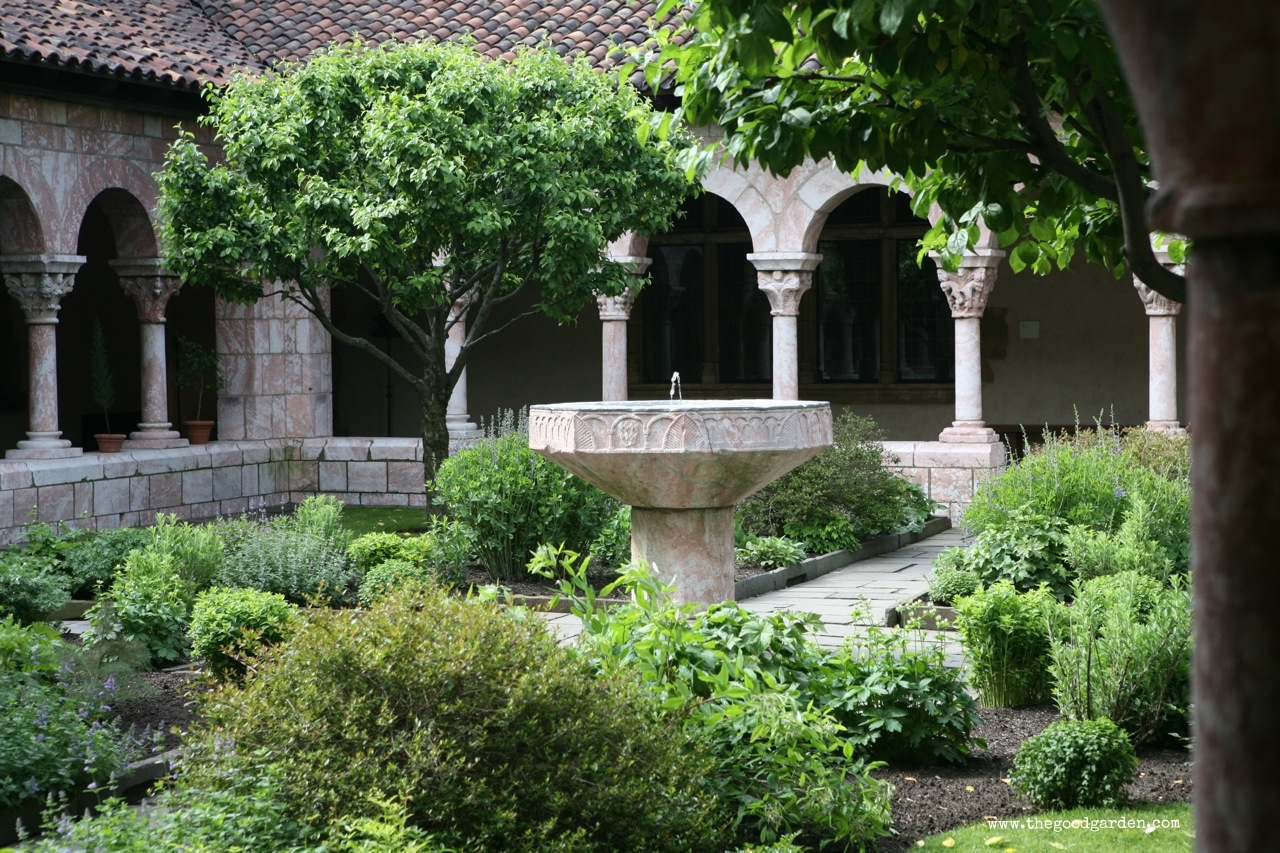
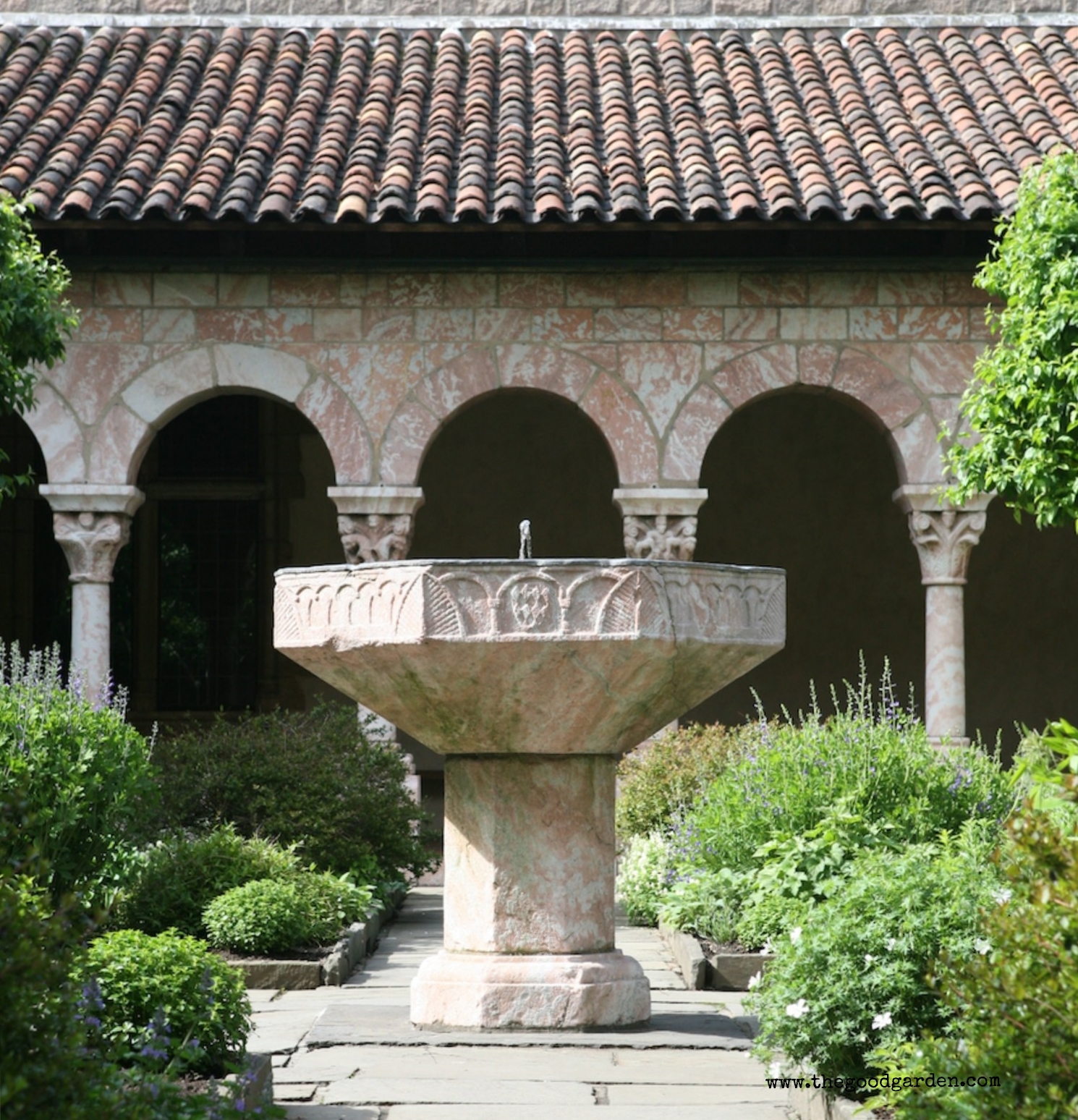
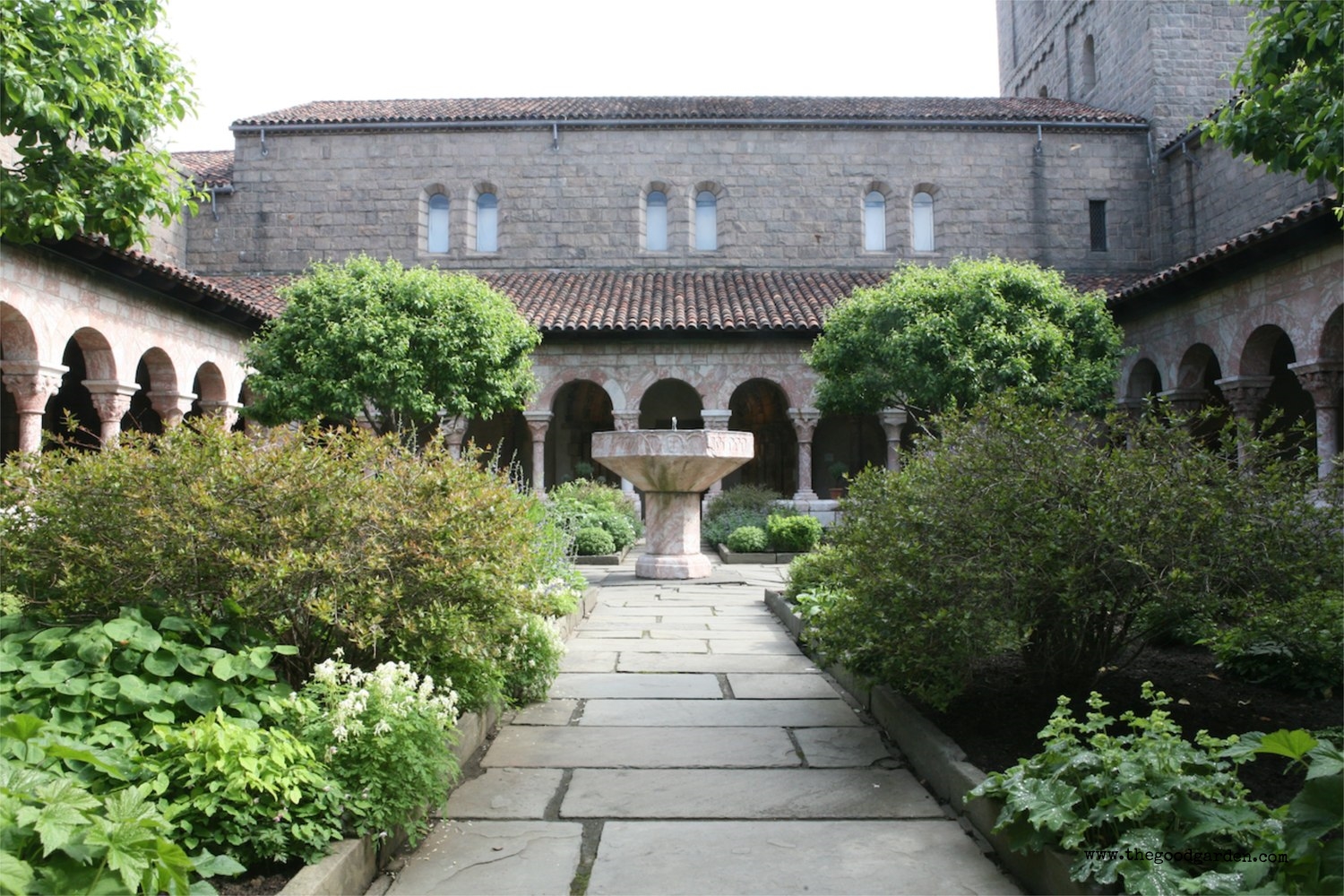
The columns form the basis for the Cuxa Cloister on the museum’s main level.  Here you will find a typical design of a grass area crisscrossed by stone paths with a central fountain.  Perennial herbs such as rosemary, sage, and lavender complete the composition.

High above the Hudson River, off the beaten tourist track, The Cloisters museum is a ‘must see’ when you are in New York City.  Check out the historic images on their website. 

The story has a happy ending on both sides of the Atlantic.  The original Abbey in France was picked up by Cistercian monks in 1919 and restored in the 1950's.  Famous Catalan cellist Pablo Casals founded a music festival that has made the Abbey a destination once again.  Today the Abbey is also a center for Romanesque Art and home to a community of Benedictine monks.  More information is available at the Abbey's website.

The maps below highlight the current and original location of the columns.  Ah, the many stories that a single garden can tell.


In Cloister Tags George Grey Bernard, St. Michel de Cuxa, John D. Rockefeller, Metropolitan Museum of Art, Cloisters Museum, garden ideas, rare relics, garden history, Garden inspiration, garden ornament, historic gardens, famous gardens, famous gardens of the world, garden stories, The Cloisters Garden of Manhattan, garden design, The Met Cloisters
1 Comment
  • Blog
  • Older
  • Newer
Subscribe
No results found
Garden stories
 
facebook email
  • Policies
  • Contact
  • Subscribe
Garden stories

©2025 David Calle. The Good Garden.

the good garden

garden history, design inspiration

facebook email